
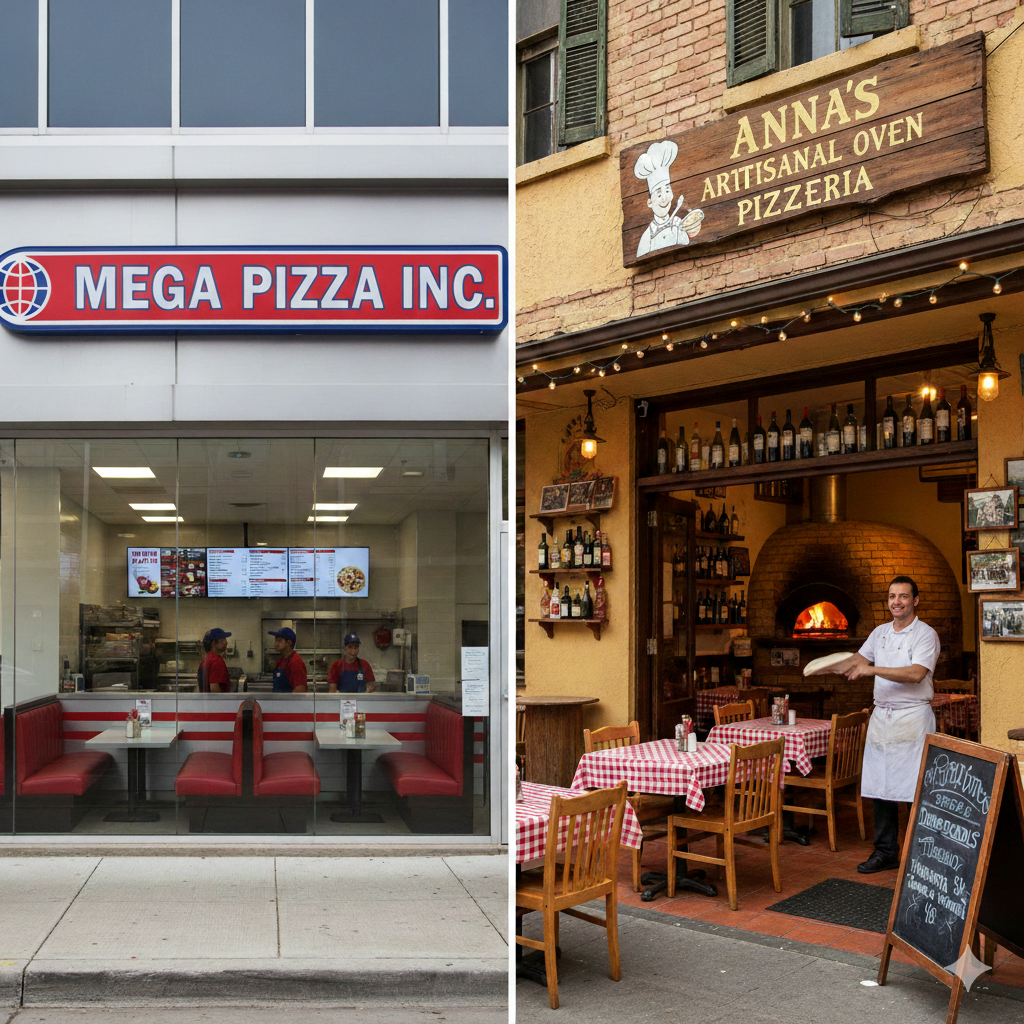
Franchise vs Independent Pizza Restaurant: Profit Margins, Startup Costs, SBA Approval & Exit Value in Florida (2026)
Meta Description:
Franchise vs Independent Pizza Restaurant explained with real Florida profit margin comparisons, royalty impact analysis, startup cost breakdowns, SBA underwriting differences, and resale implications for 2026 buyers and sellers.
The Core Financial Difference Between Franchise and Independent Pizza Models
When evaluating a Franchise vs Independent Pizza Restaurant, most buyers focus on brand recognition first. That’s understandable. A known logo feels safer than a local name. But in Florida transactions, the real difference shows up in the financial structure — not the signage.
The key distinction comes down to this:
Franchise = structured system with recurring royalty cost
Independent = operational freedom with higher execution risk
That single difference impacts profit margins, SBA loan sizing, resale value, and long-term scalability.
Before comparing them directly, it helps to understand the underlying financial engine of a pizza business. If you haven’t reviewed the fundamentals of Pizza Restaurant Profitability, that pillar breaks down realistic margin ranges and operating benchmarks in Florida.
Let’s examine how royalties, purchasing rules, and cost structures change the math.
Royalty and Marketing Fees: The Hidden Margin Reducer
In a franchise model, revenue does not fully belong to the operator. A percentage flows back to the franchisor every month.
Typical franchise fee structure:
- 4%–8% royalty on gross revenue
- 2%–5% national marketing fund
- Required technology or POS platform fees
- Potential regional advertising contributions
On a $1,200,000 annual revenue pizza shop, even a modest 6% royalty equals:
$1,200,000 × 6% = $72,000 per year
Add a 3% marketing contribution:
$1,200,000 × 3% = $36,000 per year
That’s $108,000 removed from operating income before rent, payroll, utilities, or debt service are even considered.
This directly affects:
- Net margin
- Seller’s Discretionary Earnings (SDE)
- EBITDA
- Debt Service Coverage Ratio (DSCR)
If the business is SBA-financed, those royalty payments reduce available income for loan repayment. That’s why this topic connects directly to SBA Financing for Pizza Restaurants — lenders calculate coverage after royalty obligations, not before.
In contrast, independent operators retain that 6–10% of revenue. That additional retained cash flow often pushes independent margins higher on paper.
However, there’s a tradeoff.
Franchise systems provide:
- Standardized recipes
- Vendor relationships
- Training systems
- National marketing
- Brand awareness
Independent operators must create all of that themselves.
So while an independent shop may show stronger raw margins, execution risk is higher. If marketing is weak or pricing is mismanaged, that margin advantage disappears quickly.
Vendor Flexibility vs Required Purchasing Agreements
One of the least understood aspects of the Franchise vs Independent Pizza Restaurant decision is vendor restriction.
Franchises typically require:
- Approved cheese suppliers
- Mandatory dough specifications
- Corporate-negotiated food distributors
- Standardized packaging
These contracts may secure consistent quality and sometimes better pricing due to purchasing power. But they also limit flexibility.
Independent shops can:
- Change suppliers freely
- Negotiate local distributor pricing
- Adjust portion control rapidly
- Swap ingredients to protect margin
For example, if cheese prices spike 12% in a quarter, an independent operator can adjust menu pricing immediately. A franchise operator may need corporate approval or must maintain standardized pricing.
That flexibility can preserve margin — especially in volatile commodity environments.
From a valuation perspective, vendor control influences how buyers evaluate risk. When determining what a shop is worth, buyers often compare food cost trends, contract obligations, and supplier dependencies. If you’re analyzing this deeper, reviewing How to Value a Pizza Restaurant in Florida will clarify how these structural differences impact multiples.
In short:
- Franchise = operational consistency + cost structure rigidity
- Independent = flexibility + performance variability
Neither is automatically superior. The right choice depends on the buyer profile and long-term objective.
Startup Costs — Franchise vs Independent
The next major difference in the Franchise vs Independent Pizza Restaurant comparison is capital requirement.
Many buyers assume independent shops are cheaper to open. Sometimes that’s true — but not always.
Let’s break it down realistically for Florida markets.
Franchise Startup Cost Breakdown
Opening a franchise pizza location typically includes:
- Initial franchise fee: $25,000–$50,000
- Build-out to brand specifications
- Required signage package
- Approved equipment list
- Technology onboarding fees
- Required training expenses
- Minimum working capital reserve
Total investment commonly ranges between:
$350,000 to $700,000+, depending on square footage and market.
Franchisors often require proof of liquidity and net worth before approval. That requirement alone filters many first-time buyers.
Additionally, SBA lenders may require:
- Franchisor listed in SBA registry
- Signed franchise agreement
- Brand performance data
Buyers exploring these opportunities often begin with a broader acquisition roadmap, such as Buying a Pizza Restaurant in Florida, which explains due diligence steps and financial readiness.
Franchise startup costs are higher upfront — but brand recognition can shorten ramp-up time.
Independent Startup Cost Breakdown
Independent pizza restaurants can sometimes be launched at lower cost — particularly in second-generation restaurant spaces.
Typical cost components:
- Lease deposit
- Build-out (if space not turnkey)
- Equipment purchase (new or used)
- Hood and ventilation system
- POS system
- Branding and signage
- Initial inventory
- Working capital (3–6 months recommended)
Total investment often ranges between:
$200,000 to $500,000, depending heavily on space condition.
One major advantage for independent buyers is the ability to lease an existing restaurant footprint. Reviewing available Second-Generation Restaurant for Lease spaces can reduce build-out costs significantly.
However, independent startups carry:
- Brand-building burden
- Marketing uncertainty
- Slower revenue ramp-up risk
From a financing perspective, lenders scrutinize independent projections more aggressively than franchise-backed projections. Historical performance matters more than concept strength.
Strategic Observation
At the startup stage, the Franchise vs Independent Pizza Restaurant decision is less about ideology and more about:
- Capital availability
- Risk tolerance
- Operational experience
- Long-term exit plan
In Florida’s competitive restaurant market, both models can succeed — but they operate under very different financial architectures.
SBA Approval Differences — Why Lenders Treat Them Differently
When analyzing a Franchise vs Independent Pizza Restaurant, buyers often assume financing works the same for both. It doesn’t.
From an SBA lender’s perspective, these two models carry different risk profiles. That difference influences:
- Loan size
- Required down payment
- Debt Service Coverage Ratio (DSCR) flexibility
- Documentation scrutiny
- Approval speed
If you’ve already reviewed the broader mechanics inside SBA Financing for Pizza Restaurants, you know lenders focus on historical cash flow, documentation quality, and lease strength. But brand structure adds another layer.
Let’s break down how lenders actually think.
Why Franchises Often Receive Easier SBA Approval
SBA lenders generally view established franchise brands as lower operational risk.
Why?
Because franchises provide:
- Standardized operating systems
- Historical performance benchmarks
- Corporate training programs
- Recognized branding
- Centralized vendor relationships
If a franchise is listed in the SBA Franchise Directory, the lender already knows the franchise agreement has been reviewed for compliance. That removes one underwriting hurdle.
In Florida markets, lenders may also rely on brand-level performance averages to support projections. That doesn’t replace historical tax returns, but it adds context.
For example:
If a Domino’s or Papa John’s location shows consistent three-year tax returns, lenders may feel more comfortable approving 90% financing because:
- Brand recognition supports stability
- Operational systems reduce execution risk
- Marketing is built in
- Resale liquidity is stronger
However, this doesn’t mean franchises are automatically better financed.
Royalty payments reduce available cash flow — and lenders calculate DSCR after those obligations.
To see how debt coverage is measured, buyers should model scenarios using the SBA Loan Calculator before committing to a price.
Brand comfort improves approval probability — but royalty math still controls loan size.
Why Independent Pizza Shops Face Stricter Underwriting
Independent pizza restaurants lack corporate backing. That shifts the focus entirely to:
- Tax return history
- Owner dependency
- Lease terms
- Cash flow consistency
- Local reputation
Lenders ask tougher questions such as:
- Is revenue trending up or down?
- How much cash sales are unreported?
- Can the business survive without the current owner?
- Does the lease meet SBA minimum term requirements?
Cash-heavy independent shops often run into underwriting problems. Lenders rely on tax returns — not POS claims. If reported income is artificially low to reduce taxes, loan size will shrink.
This is why understanding real operating cash flow is essential. If you haven’t reviewed it recently, Understanding Business Cash Flow explains how lenders evaluate income differently from operators.
Independent shops can absolutely secure SBA financing — but documentation must be clean and defensible.
Profit Margin Comparison — Realistic Florida Examples
Let’s now compare two identical revenue scenarios in Florida.
Both shops generate:
$1,200,000 in annual revenue
The difference lies in structure.
Scenario 1: $1.2M Franchise Location
Revenue: $1,200,000
Expenses:
- Food Cost (31%) = $372,000
- Labor (26%) = $312,000
- Rent (8%) = $96,000
- Utilities (3%) = $36,000
- Insurance & Misc (4%) = $48,000
- Royalty (6%) = $72,000
- Marketing Fund (3%) = $36,000
Total Operating Expenses: $972,000
Remaining Operating Income: $228,000
Before debt service.
Now assume:
SBA Loan = $700,000
10-year term at ~9%
Annual payment ≈ $110,000
Remaining Pre-Tax Cash Flow:
$228,000 – $110,000 = $118,000
DSCR = $228,000 ÷ $110,000 ≈ 2.07
That’s healthy — but note how royalty fees reduced available coverage.
Franchise structure supports approval probability. But royalty compresses retained income.
For a deeper understanding of baseline margin ranges, refer back to Pizza Restaurant Profitability where independent and franchise margin averages are explained in detail.
Scenario 2: $1.2M Independent Pizza Shop
Revenue: $1,200,000
Expenses:
- Food Cost (32%) = $384,000
- Labor (25%) = $300,000
- Rent (8%) = $96,000
- Utilities (3%) = $36,000
- Insurance & Misc (4%) = $48,000
No royalty. No marketing fund.
Total Operating Expenses: $864,000
Remaining Operating Income: $336,000
Now apply the same SBA loan:
Annual payment ≈ $110,000
Remaining Pre-Tax Cash Flow:
$336,000 – $110,000 = $226,000
DSCR = $336,000 ÷ $110,000 ≈ 3.05
That is materially stronger.
On paper, the independent shop produces significantly more retained cash.
But here’s the nuance.
Lenders may haircut independent income if:
- Add-backs are aggressive
- Owner compensation is unclear
- Cash sales are undocumented
- Lease risk exists
The franchise’s structured reporting sometimes offsets its lower margin.
This is where valuation discipline matters. If you’re comparing deal pricing, How to Value a Pizza Restaurant in Florida explains how SDE multiples adjust based on documentation strength and lease terms.
How Royalty Structure Impacts Loan Sizing
Here’s a reality many buyers miss:
Royalty payments reduce maximum loan size.
If a lender requires minimum DSCR of 1.25, and royalty reduces operating income by $108,000 annually, the business may qualify for a smaller loan.
In practical terms:
Franchise structure may improve approval likelihood
Independent structure may increase maximum loan size
Those are different outcomes.
When evaluating Franchise vs Independent Pizza Restaurant options, buyers must ask:
- Do I want easier approval with slightly lower margin?
- Or stronger margin with tighter underwriting scrutiny?
Neither path is wrong — but each requires strategic positioning.
Exit Value and Resale Multiples — Which Model Sells Better in Florida?
When analyzing a Franchise vs Independent Pizza Restaurant, long-term buyers must think beyond startup cost and monthly profit. Exit strategy matters.
How easily can you sell the business in five to seven years?
How large is the buyer pool?
Will the brand increase liquidity — or will royalty compress the multiple?
In Florida’s restaurant market, both franchise and independent pizza shops typically sell within a similar range:
2.0x–3.0x Seller’s Discretionary Earnings (SDE)
But the reasons behind those multiples differ.
If you want deeper context on how pizza shops are priced in this market, review How to Value a Pizza Restaurant in Florida before structuring a long-term strategy.
Let’s break the models down.
Franchise Resale Multiples
Franchise pizza locations often attract:
- First-time buyers seeking structure
- Multi-unit franchise operators
- Investors familiar with the brand
- Out-of-state buyers relocating to Florida
Brand recognition expands the buyer pool. That liquidity can stabilize multiples.
Typical resale characteristics:
- 2.25x–3.0x SDE for strong performing units
- Mandatory franchisor approval for buyer transfer
- Transfer fees (often $5,000–$25,000)
- Required buyer training
Brand transfer approval is a key factor. Even if a buyer and seller agree on price, the franchisor must approve the incoming operator. That additional layer can slow transactions but also preserves system stability.
Franchises also benefit from predictable financial structures. Lenders understand the model, and buyers feel safer with known systems.
If you’re exploring broader franchise transaction mechanics, Franchise Resale Valuation explains how brand approval and royalty impact final pricing.
However, franchise exit value is still influenced by:
- Lease strength
- Location quality
- Store condition
- Local competition
- Profit trend
Brand alone does not guarantee premium pricing.
Independent Pizza Shop Exit Multiples
Independent pizza restaurants may sell within the same multiple range — but the buyer pool differs.
Independent buyers often include:
- Owner-operators
- Local entrepreneurs
- Experienced restaurant operators
- Buyers seeking higher retained margin
Because there’s no franchisor approval process, transactions can move faster once financing is secured.
However, independent valuations rely heavily on:
- Lease terms
- Local reputation
- Documentation clarity
- Add-back credibility
Lease structure plays an outsized role. If the lease has less than 7–10 years remaining (including options), SBA lenders may reduce loan size. That directly impacts buyer affordability and therefore resale value.
We will examine lease-specific risks in detail in the upcoming cluster on Pizza Restaurant Lease Transfer Issues, but it’s important to understand that lease strength can affect exit value more than brand type.
Independent shops with clean books and strong lease terms often sell just as smoothly as franchises.
The difference is documentation discipline.
Risk Comparison — Stability vs Flexibility
At this stage, the Franchise vs Independent Pizza Restaurant decision becomes a risk preference question.
Let’s compare.
Brand Risk vs Operational Risk
Franchise Risk Profile:
- Lower brand risk
- Structured marketing support
- Predictable vendor systems
- Royalty burden
- Less pricing flexibility
Independent Risk Profile:
- Higher brand-building responsibility
- Greater margin control
- Full pricing authority
- Local competition exposure
- Reputation-dependent revenue
Franchises reduce uncertainty in marketing and operations but create dependency on corporate systems.
Independents increase autonomy but demand stronger management discipline.
From a financial standpoint, reviewing baseline profitability benchmarks in Pizza Restaurant Profitability helps clarify how small margin shifts compound over time.
Economic Downturn Resilience
In softer economic cycles:
- Recognized franchise brands often maintain steadier traffic
- National advertising sustains awareness
- Promotions are coordinated system-wide
Independent shops rely more heavily on local loyalty and reputation.
However, independent operators can respond faster to market shifts:
- Adjust menu pricing immediately
- Modify portion sizes
- Introduce targeted promotions
- Negotiate short-term vendor adjustments
The ability to adapt quickly can protect margins — especially when commodity prices fluctuate.
Multi-Unit Expansion Scalability
Scalability is where franchise models often shine.
If your long-term objective includes owning 3–5 locations, franchise systems provide:
- Replicable processes
- Structured training
- Operational manuals
- Corporate expansion support
Multi-unit franchise operators may even attract interest from private equity groups once EBITDA reaches sufficient scale.
If you’re evaluating long-term expansion potential, reviewing Lower Middle Market Private Equity gives perspective on how larger restaurant platforms are valued.
Independent multi-unit operators can also scale — but must build systems internally. That requires stronger management infrastructure and standardized reporting.
Franchise scalability = structured growth
Independent scalability = entrepreneurial growth
Both paths work — but require different skill sets.
Which Model Is Easier to Resell in Florida?
In Florida’s active restaurant transaction market:
- Franchises often sell faster in dense metro areas
- Independents often sell faster in suburban or neighborhood markets
Franchises benefit from brand-driven buyer inquiries.
Independents benefit from higher retained margin and flexible pricing appeal.
But here’s the important insight:
Lease strength, documentation clarity, and clean tax returns influence resale liquidity more than brand type.
Poor books kill deals.
Short lease terms kill deals.
Inflated add-backs kill deals.
Model choice does not override fundamentals.
Who Should Choose Franchise vs Independent? (Florida Buyer Profiles)
At this stage, the Franchise vs Independent Pizza Restaurant decision becomes less about math and more about buyer profile.
Both models can be profitable. Both can be financed. Both can be resold.
The right choice depends on experience, capital structure, and long-term goals.
Let’s break down typical Florida buyer types.
First-Time Buyer With Limited Restaurant Experience
Franchise is often the safer entry point.
Why?
- Structured training
- Corporate operating systems
- Established brand marketing
- Defined vendor relationships
SBA lenders may also feel more comfortable approving loans for first-time operators if the franchise provides onboarding support. As explained in SBA Financing for Pizza Restaurants, lender perception of operational risk influences approval comfort.
However, the buyer must be comfortable with:
- Royalty obligations
- Corporate oversight
- Reduced pricing flexibility
If structure feels reassuring, franchise is typically the stronger choice.
Experienced Owner-Operator Seeking Higher Margin
An experienced operator who understands:
- Food cost control
- Labor scheduling
- Local marketing
- Inventory discipline
may prefer an independent model.
Why?
Because retained margin can be materially higher.
As shown earlier, removing 6–10% royalty can significantly increase available cash flow. That increased income may also improve loan sizing under conservative DSCR modeling.
For buyers comfortable managing operations without corporate guardrails, independent can offer stronger long-term earnings.
Investor Building a Multi-Unit Platform
If the objective is scale — 3 to 5 locations — franchise models often offer cleaner replication.
Standardized procedures make delegation easier.
That said, independent operators who build internal systems can scale just as effectively. But they must invest in management infrastructure.
Expansion-minded buyers should think beyond Year 1 profitability and evaluate long-term enterprise value.
E-2 Visa Buyers in Florida
Florida attracts international buyers using E-2 investor visas.
Franchise systems can simplify:
- Business plan credibility
- Job creation documentation
- Operational structure explanation
However, independent pizza restaurants also qualify if properly structured.
Buyers exploring immigration-based acquisition strategies should review guidance from specialists such as Business Broker in Florida for E2 Visa Buyers to understand structuring nuances.
The key requirement is not brand type — it’s demonstrating viable business operations and job creation.
Frequently Asked Questions
- Is a franchise pizza restaurant more profitable than independent?
Not necessarily. Franchise locations often generate strong revenue but pay ongoing royalties. Independent shops may retain higher net margins if managed efficiently.
- Are franchises easier to finance with SBA loans?
Often yes, because lenders recognize established brands. However, royalties reduce available income, which can limit loan size.
- Do independent pizza restaurants sell for less?
Not automatically. Well-documented independent shops with strong leases can sell within the same 2.0x–3.0x SDE range as franchises.
- How much do royalties affect long-term value?
A 6% royalty on $1.2M revenue equals $72,000 annually. Over five years, that’s $360,000 in retained earnings difference compared to an independent model.
- Which model is easier to resell in Florida?
Liquidity depends more on lease strength and financial documentation than brand structure. Both models can sell efficiently when properly prepared.
- Can an independent pizza shop convert into a franchise?
Sometimes, but it requires meeting franchisor build-out standards and approval processes. Conversion costs can be significant.
Final Verdict — Which Model Builds More Long-Term Value?
The Franchise vs Independent Pizza Restaurant decision ultimately depends on your priorities:
Choose franchise if you value:
- Brand recognition
- Structured systems
- Predictable operational support
- Potentially smoother SBA approval
Choose independent if you value:
- Higher retained margins
- Pricing flexibility
- Vendor control
- Full operational autonomy
In Florida’s competitive market, both models can succeed. But neither compensates for poor financial discipline.
Lease strength, tax return accuracy, cost control, and realistic valuation determine success far more than logo size.
Before making a final decision, buyers should revisit:
- Pizza Restaurant Profitability for baseline margin expectations
- How to Value a Pizza Restaurant in Florida for realistic pricing multiples
- Buying a Pizza Restaurant in Florida for due diligence strategy
Model choice matters.
But disciplined underwriting, conservative projections, and clean documentation matter more.